Certified Radon Measurement Technician
Radon is the second leading cause of lung cancer in the U.S.* — and it's completely undetectable without a test.
What Is Radon?
Radon is a naturally occurring radioactive gas that seeps up from the soil into homes through foundation cracks, sump pits, and crawlspaces. You can't see it, smell it, or taste it — but elevated levels are a serious, well-documented health risk, especially with prolonged exposure.
North Carolina has areas with moderate to elevated radon potential, and levels can vary significantly even between neighboring homes. The only way to know your home's actual level is to test it.
* Source: U.S. Environmental Protection Agency (EPA). A Citizen's Guide to Radon. EPA 402-K-12-002. www.epa.gov/radon
How Testing Works
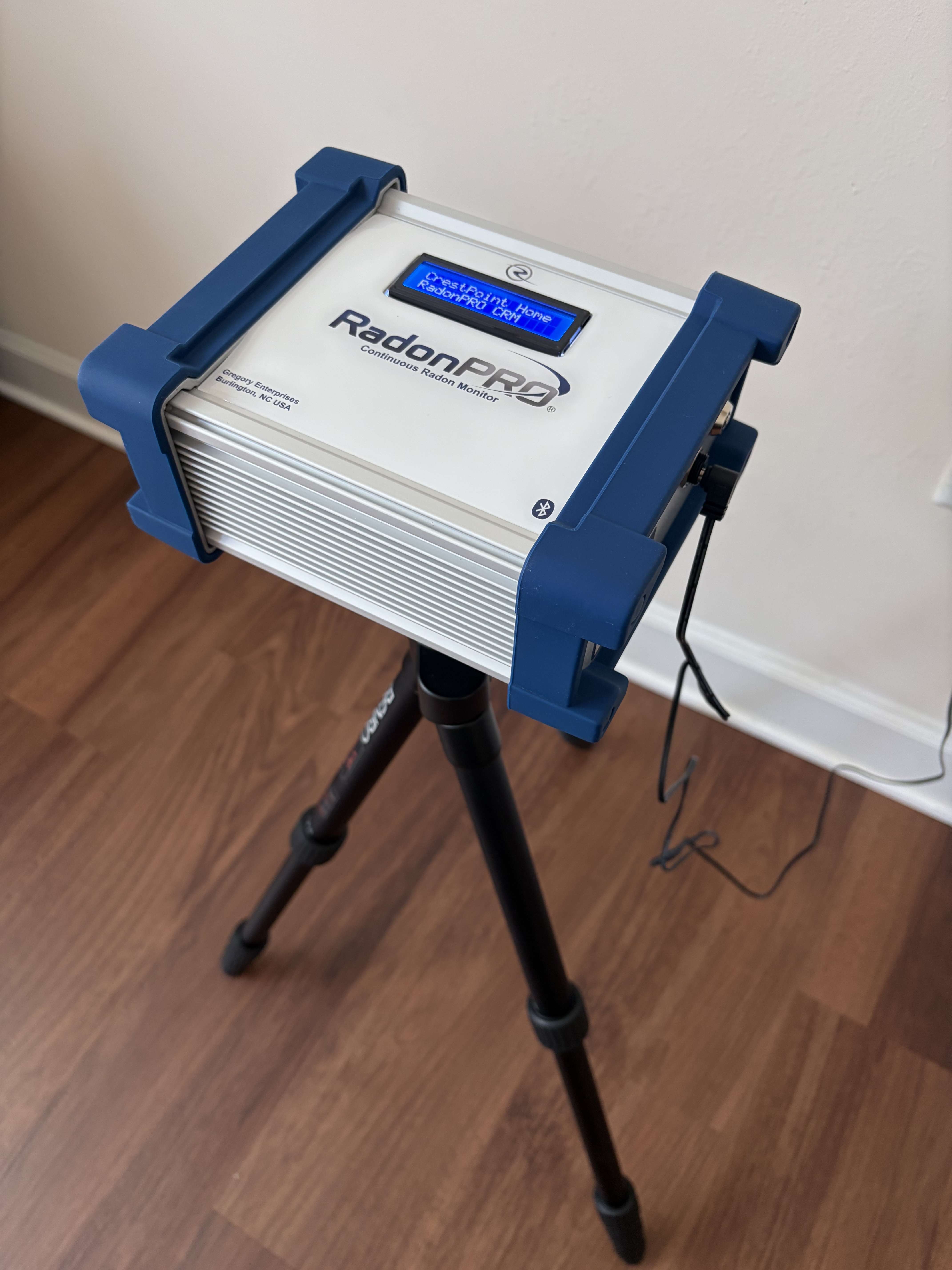
A continuous radon monitor is placed in the lowest livable area of the home — typically a basement or ground floor.
The monitor records radon levels continuously over a minimum 48-hour period under regulated conditions, per EPA protocol.
You receive a straightforward report of average levels along with what they mean and recommended next steps if mitigation is advised.
Who Should Test
Radon testing can be added to any home inspection or scheduled as a standalone service.
If Levels Are Elevated
If your test comes back at or above the EPA's action level of 4.0 pCi/L, radon mitigation systems are a well-established, effective solution that typically reduce levels significantly. I'll walk you through what the results mean and connect you with next steps.
Crestpoint Home Inspections performs radon measurement testing in accordance with national protocol standards, giving you results you can rely on.
Add radon testing to your next inspection or schedule it on its own.
Schedule an Inspection